

Quick answer
Touch is the one part of “energy healing” that science has mapped in detail. The skin carries receptors for pressure, stretch, warmth and cold, and their discovery earned David Julius and Ardem Patapoutian the 2021 Nobel Prize in Physiology or Medicine. Slow, light stroking activates nerve fibres tied to comfort and social bonding; firm pressure and warmth relax muscle and lower stress hormones for a while. None of this needs an energy field to explain it, and all of it is available from a massage, a warm bath or a hand on your shoulder. For what an energy-healing session adds beyond the touch, see the hub: Understanding Energy Healing.
What each kind of touch does, and the evidence behind it
| Kind of touch | What the body does | Evidence | Easy way to get it |
|---|---|---|---|
| Slow, light stroking (about 3 cm a second) | Activates C-tactile fibres in hairy skin that signal to brain areas for comfort and social bonding; heart rate drops. | Well replicated in lab studies of “affective touch”. | A partner’s hand on the forearm or back; stroking a pet works the same way for you. |
| Firm pressure (massage) | Reduces muscle tension and reported pain; short-term drops in cortisol and anxiety scores. | Consistent short-term benefits in trials; effects fade within days, so it is maintenance, not cure. | A professional massage, a foam roller, or self-massage with warm oil. |
| Warmth | Heat receptors (the same ones chilli triggers) open blood vessels and ease stiff muscle. | Established for muscle pain and menstrual cramps. | Heat pad, warm bath, hot-water bottle. |
| Cold | Cold receptors slow nerve conduction and reduce swelling; a brief cold shock also jolts an anxious mind back into the body. | Established for acute injury; for mood, small studies and lots of anecdote. | Cold water on the wrists; see Grounding Yourself. |
| Pressure under the feet | Stretch and pressure receptors feed the sense of balance and position, which is calming in itself. | Basic physiology; walking is among the best-evidenced mood lifts. | A barefoot walk on grass or sand. |
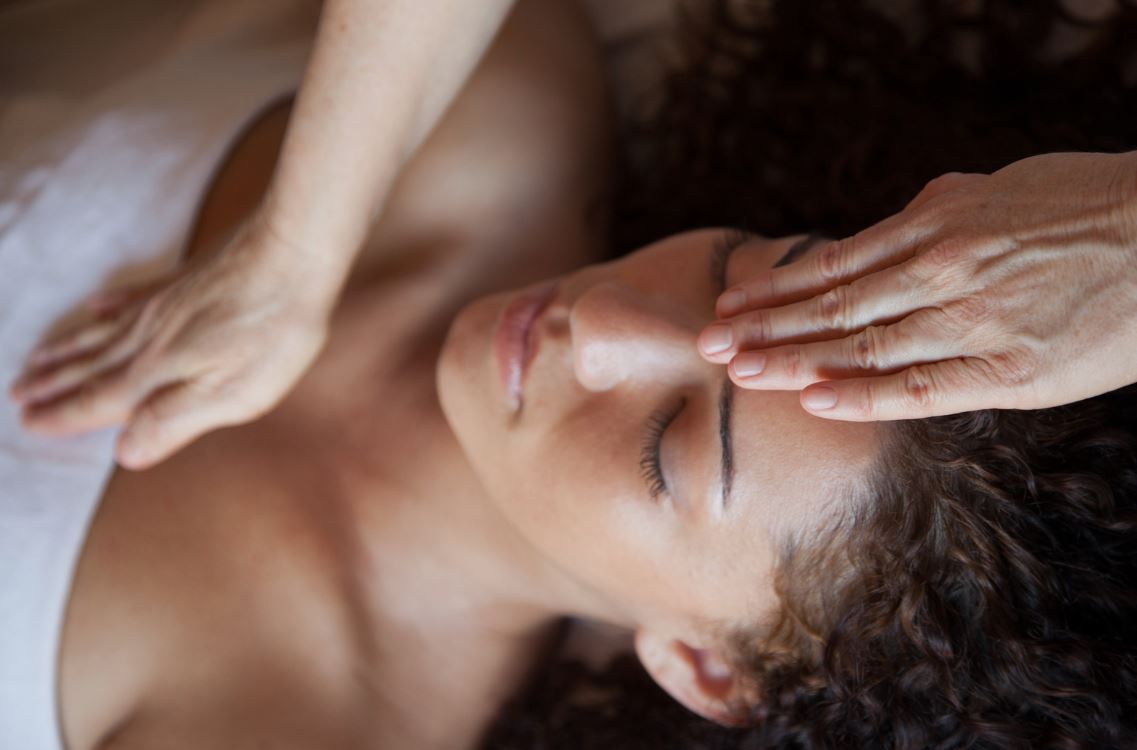
| Hands on or near the body without movement (Reiki-style) | Warmth from the hands plus stillness and attention. | Relaxation reported; no field detected and no effect beyond the rest and touch themselves. | A hand on your own chest or belly; see Use Your Hands to Recharge. |
The 2021 Nobel Prize, in one paragraph
David Julius used capsaicin, the compound that makes chillies hot, to find the receptor (TRPV1) that lets nerve endings sense heat, then found the menthol-triggered receptor for cold. Ardem Patapoutian found the Piezo channels that open when a cell is pressed or stretched, which is how you feel a touch, know where your limbs are, and how your body senses blood pressure and a full bladder. The Nobel committee’s press release has the detail. It is a good story to keep in mind: the reason a warm hand on a sore back helps is known, and it is molecular, not mystical.
A ten-minute self-massage routine
- Warm a little oil (plain sunflower or almond) between your palms. Ayurveda calls this abhyanga; the tradition is old, the effect is mostly the pressure and warmth.
- Feet first: thumbs into the arches, slow circles, a minute each foot.
- Calves and thighs: long strokes toward the heart, moderate pressure.
- Belly: flat hand, slow clockwise circles, light pressure.
- Shoulders and neck: opposite hand squeezing the top of each shoulder, then fingertips up the back of the neck.
- Face and scalp: fingertips in small circles from jaw to temples, then through the hair.
- Finish with a warm shower and a glass of water. Skip broken skin, rashes, and any area that hurts sharply; ask a doctor before massaging a swollen leg.
What a session adds beyond the touch
The hub sets out what energy healing sessions involve, what research found when the touch and the “energy” were separated, and how to choose a practitioner who will not oversell it.
The mention of Ardem Patapoutian and David Julius adds credibility to the discussion on mechanosensitive channels and temperature sensors. Their pioneering work underscores the importance of understanding these mechanisms for potential therapeutic applications.
The article effectively illustrates the physiological basis for various touch therapies and their impact on the nervous system. The historical context provided serves to enrich our understanding of these practices and their relevance today.
The article provides a comprehensive overview of how touch therapy and ancient practices align with modern scientific research. It’s fascinating to see how the nervous system’s response to stimuli like pressure and temperature can influence various bodily functions.
The connection between traditional healing methods like Ayurveda and modern scientific findings is intriguing. It’s a reminder that ancient wisdom often holds valuable insights that can complement contemporary research.
The detailed explanation of how touch and temperature interact with the nervous system to help with conditions like stress, insomnia, and pain is enlightening. It highlights the potential of integrating sensory therapies into holistic health practices.