

Quick guide
Seeing an owl means an owl lives near you and you happened to be looking. That sounds deflating and is not: owls are secretive, mostly nocturnal, and superbly camouflaged, so a sighting is a real gift of attention, and the meaning people have made of that moment for thousands of years is worth knowing. Owls have stood for wisdom in Greece, ill omen in Rome, luck in Japan, wealth in parts of India, and death or witchcraft in several Native American traditions, and none of those readings has ever predicted anything; no bird foretells a death or a windfall. What an owl sighting reliably reveals is what is on your mind, because the meaning you reach for first is yours. This article gives the natural history, the reasons you might be seeing owls now, a table of what cultures have made of them, an honest way to use the moment, and how to help the owl you saw.
The bird itself
There are around 250 owl species, on every continent except Antarctica, from the elf owl at the size of a sparrow to the Eurasian eagle-owl with a wingspan approaching two metres. Most hunt at night, using a flat facial disc that funnels sound to ears set at slightly different heights, which lets them locate a mouse under snow by hearing alone. Their flight is nearly silent because of comb-like fringes on the leading edge of the wing. They cannot move their eyes, so they turn their heads instead, up to about 270 degrees, thanks to fourteen neck vertebrae and blood vessels adapted to avoid being pinched. Many species pair for years and some, such as barn owls, usually for life; the old version of this article said owls never stay together, which is wrong. They eat rodents, insects, small birds, frogs and, for the largest species, rabbits and skunks. They do not take pet dogs. The Cornell Lab’s profile of the great horned owl, the most widespread owl in the Americas, describes an animal that lives comfortably in suburbs and city parks, which is why so many people see one.
Why you are seeing an owl now
| What you noticed | What is usually going on |
|---|---|
| Hooting at night, especially in late winter and early spring | Courtship and territory. Great horned owls, tawny owls and many others call most in the months before nesting. You are hearing a pair keeping in touch or a male advertising. |
| An owl in daylight | Some owls are day-active: short-eared, snowy, burrowing, northern hawk owls, and pygmy owls. A normally nocturnal owl out by day may have been disturbed from its roost, may be feeding chicks and hunting overtime, or occasionally may be unwell. |
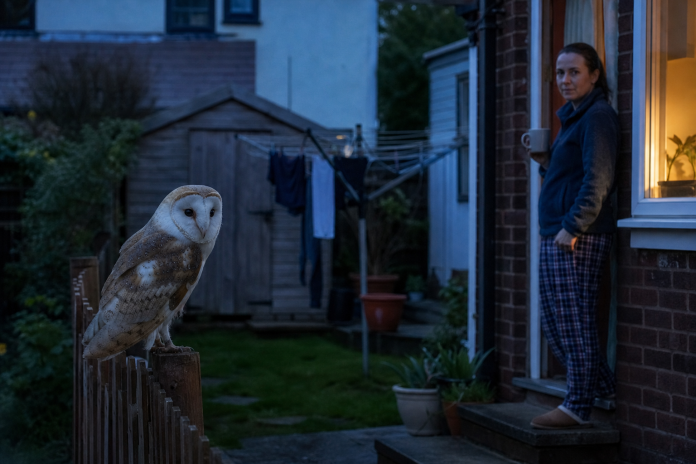
| An owl on a fence, roof or lamppost in a town | Suburbs are full of rodents and have fewer large predators. Many owls do better in towns than in intensively farmed countryside. |
| The same owl in the same place for weeks | A roost or a nest. Owls are creatures of habit and will use a favoured perch nightly. |
| An owl close to you, staring, turning its head | Owls fix on anything that moves and turn their heads because they cannot move their eyes. The stare is curiosity or caution, not a message. |
| An owl in the road at night | Owls hunt roadside verges and are often dazzled by headlights. Slow down; they are a common roadkill. |
| A young owl on the ground | A fledgling. Owlets leave the nest before they can fly well and the parents feed them on the ground. Leave it unless it is in immediate danger. |
What cultures have made of owls
| Tradition | The owl stands for | Notes |
|---|---|---|
| Ancient Greece | Wisdom; the little owl was sacred to Athena and appeared on Athenian coins | The source of the modern “wise owl” |
| Ancient Rome | Ill omen; an owl’s call was said to precede the deaths of several emperors | The source of the modern “owl means death” |
| Medieval Europe | Darkness, heresy, the devil’s creatures; also, in folk medicine, a cure for various ills | Night animals were suspect in general |
| Several Native American nations | Varies widely: death, witchcraft and warning in some (for example among Navajo, Apache and Hopi traditions); protection, wisdom or guardianship in others | There is no single “Native American owl meaning”; each nation’s teaching belongs to that nation |
| Hinduism | The owl is the vehicle of Lakshmi, goddess of wealth; also, in some regions, foolishness | Why white owls are read as prosperity in Indian-influenced folklore |
| Japan | Luck and protection: the word fukuro can be read as “no hardship”; owl charms are common | A pun, and a cheerful one |
| Parts of Africa and the Middle East | Often ill omen or association with sorcery; in some places the owl is simply a bird of the night | Beliefs vary by region and are not uniform |
| Modern spirituality | Intuition, seeing through deception, transition, the ability to move in darkness | A synthesis of the above with the wisdom reading dominant |
How to use an owl sighting
- 1. Stop and watchYou have a few seconds with a wild animal most people never see clearly. Take them. Do not approach, do not use a flash.
- 2. Notice what you thought first“Wisdom”, “a warning”, “my grandmother”, “how beautiful”. That first thought is the reading, and it came from you.
- 3. Ask what it points toIf you thought “warning”, what are you worried about? If “wisdom”, what decision are you sitting on? The owl has surfaced it; now you can look at it in daylight.
- 4. Do one thingAct on what surfaced, or simply note the date and the bird. Either way the moment has been used, not spent on dread.
Owls and death, plainly
The belief that an owl’s call foretells a death is old and widespread, and it has a simple origin: owls call at night, near houses, in the seasons when people were most likely to die, and a death that followed a call was remembered while the thousand calls that nothing followed were not. The same attention effect explains every other omen. No study has ever found owls predicting anything, and an animal cannot cause what it is said to foretell. If an owl sighting has frightened you, the fear is real and can be looked at; the omen is not. See Protecting Yourself from Psychic Attacks for the same logic applied to curses, and Finding Deeper Meaning in a Wild Bird’s Death for when the bird itself has died.
Helping the owl you saw
- Stop using rodenticides. Poisoned rats and mice are eaten by owls, and second-hand poisoning is one of the main killers of barn owls and other species. Snap traps and prevention do the job.
- Put up a nest box if you have a barn, a large tree or open land nearby; barn owls and tawny owls take to them readily.
- Leave dead trees standing where safe. Cavities are where many owls nest.
- Drive slowly on rural roads at night.
- Do not handle an owl. If one is injured or trapped in a building, call a wildlife rehabilitator; owls have powerful talons and stress easily. A dead owl found near your door is a bird that died, most often from poison, a car or a window; see the Cornell Lab’s guide to preventing window strikes.
- Do not keep feathers in the US: owls are protected under the Migratory Bird Treaty Act and possessing their feathers is illegal without a permit. Photograph and leave.
Key takeaways
- An owl sighting means an owl lives nearby and you noticed. Sightings are common in suburbs, in late winter, and at dusk.
- Cultures have read owls as wise, ominous, lucky and wealthy; the readings contradict each other and none predicts anything.
- The meaning you reach for first is yours and reveals what is on your mind. Use it that way.
- Day-active owls exist; a nocturnal owl out by day is usually disturbed or feeding chicks.
- Rodenticides, cars and windows kill owls; you can help with all three.
Related reading
- Meaning Behind Finding a Hawk Feather: traditions, and the law on keeping feathers.
- Understanding the Blue Jay Sighting: what the bird is doing and what folklore says.
- Finding Deeper Meaning in a Wild Bird’s Death: window strikes and what to do.
- What Does 8888 Mean?: the same attention effect, with numbers.
- Nine Tips to Increase Your Intuition: reading your own first thoughts.
Frequently asked questions
1. Is seeing an owl good luck or bad luck?
Both, depending on which culture you ask, which tells you the answer is neither. Owls have been read as wisdom, death, luck and wealth in different places. The sighting is good fortune in one plain sense: you saw a wild owl.
2. Does an owl mean someone is going to die?
No. The belief comes from Roman and medieval European folklore and from the way memory keeps the one call a death followed and drops the thousands that nothing followed. No bird predicts death.
3. What does it mean to see an owl in the daytime?
Usually that you have seen a day-active species (short-eared, snowy, burrowing, pygmy or hawk owl), or a nocturnal owl that was disturbed from its roost or is hunting extra hours to feed chicks. It is unusual and worth watching; it is not a warning.
4. What does it mean when an owl hoots near my house?
That an owl holds territory there, and, in late winter and spring, that a pair is courting or a male is advertising. Hooting near houses is common because gardens are good hunting.
5. Why does the owl keep looking at me?
Owls cannot move their eyes, so they turn their whole head to track anything that moves. The fixed stare is how the animal sees, not a message.
6. Is the owl my spirit animal?
“Spirit animal” as used online borrows loosely from specific Indigenous traditions in which such relationships are conferred, not chosen. If an owl matters to you, say that; it needs no borrowed title. See the note on borrowed sacred terms.
7. What does a white owl mean?
A white owl is a barn owl or, in the far north, a snowy owl. In Indian-influenced folklore white owls are linked to Lakshmi and wealth; in Europe the barn owl’s pale face and screech made it a ghost bird. It means you have seen a barn owl, which is a lovely thing.
8. Are there black owls?
No species is black. Very dark individuals of some species occur, and an owl seen against the sky at dusk looks black. The old version of this article gave black owls a meaning; the bird does not exist.
9. What does a dead owl mean?
That an owl died, most often from rodenticide poisoning, a vehicle or a window. It is not an omen and it is not warding anything off. Report it to a local wildlife group if there have been several; that pattern usually means poison.
10. An owl got into my house. What should I do?
Turn off the lights, open the largest door or window to the outside, and leave the room. If it does not leave within an hour or seems injured, call a wildlife rehabilitator. Do not try to catch it.
11. Do owls mate for life?
Many species form long pair bonds and some, including barn owls, usually stay together for life. The claim that owls never pair is false.
12. Do owls attack people or pets?
Owls defending a nest occasionally swoop at people who come too close, and great horned owls can take very small pets left out at night. Dogs are not prey. Keep cats and toy breeds in after dark in owl country, and give nests space.
13. What does the owl mean in tarot and modern spirituality?
Insight, seeing in the dark, intuition and transition. Some decks use owls on cards associated with wisdom or the unknown. It is a useful image for reflection, not a prediction.
14. Why do so many cultures link owls with death?
Owls are nocturnal, silent, appear near houses, call in eerie voices and have forward-facing eyes that look human. Every one of those made them uncanny to people who lived by daylight. The association is about the night, not about foresight.
15. What is the Native American meaning of an owl?
There is no single one. Hundreds of nations have their own teachings, ranging from warning and witchcraft to protection and wisdom. A specific nation’s teaching belongs to that nation and is best learned from its own people.
16. How can I see owls more often?
Go out at dusk in late winter, stand still near woodland edges or open fields, and listen before you look. Local birding groups run owl walks. Never use playback calls or flash; both disturb the birds.
17. Can I keep an owl feather I found?
In the US, no; owls are protected under the Migratory Bird Treaty Act and possessing feathers without a permit is illegal. Elsewhere, check local law. Photograph it and leave it.
18. What should I take from my sighting?
Whatever you thought first, examined in daylight. If it was wonder, keep it. If it was fear, ask what you are actually afraid of and deal with that. The owl did its part by being there.
Evidence note: this article presents owl symbolism as cultural tradition and owl sightings as natural events with ordinary explanations. Claims in the earlier version that owls eat dogs, never pair, come in a black species, or foretell death, including the death of a baby, were false and have been removed. Owls are protected wildlife; the conservation guidance follows standard advice from ornithological bodies.
It’s enlightening to read about the different interpretations of owl sightings. Whether seen as omens or symbols of wisdom, it’s evident that cultural contexts heavily influence these beliefs.
The diverse types of owls discussed here, such as Great Horned and Screech Owls, show how varied this group of birds is. Understanding their different calls and behaviors adds depth to our knowledge of avian life.
Owls have always intrigued me, and this article sheds light on their fascinating aspects, from their hunting patterns to their symbolic meanings. It seems owls can represent a range of things from wisdom to death.
The physiological details about owls, such as their night vision and neck flexibility, are particularly captivating. It’s clear that these traits contribute significantly to their predatory efficiency.
The article provides an extensive overview of owl species, their behaviors, and the cultural significance attached to them. It’s interesting to see how owls have been interpreted in different civilizations.